







 Armenia
 Azerbaijan
 Bulgaria
 Georgia
 Iran
 Kazakhstan
 Kyrgyzstan
 Moldova
 Romania
 Tajikistan
 Türkiye
 Turkmenistan
 Ukraine
 Uzbekistan
TRACECA – A Global Approach to Developing Transport Connectivity: Areas of Cooperation Discussed
On 17 September 2026, a meeting was held at the Ministry of Foreign Affairs of the Republic of Azerbaijan between H.E. Mr. Jeyhun Bayramov, Minister of Foreign Affairs and Mr. Jasurbek Choriev, Secretary General of the Permanent Secretariat of the Intergovernmental Commission TRACECA.
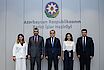
During the meeting, the sides held a thorough exchange of views on topical issues of the regional transport agenda, the deepening of cooperation between Azerbaijan and TRACECA, and the implementation of strategic initiatives aimed at unlocking the transit and transport potential of the Europe-the Caucasus-Asia corridor.
H.E. Mr. Jeyhun Bayramov, the Minister of Foreign Affairs, emphasised that Azerbaijan attaches priority importance to the development of international transport cooperation and consistently invests in the modernisation of national transport and logistics infrastructure. It was noted that, against the backdrop of current geopolitical and economic developments, ensuring the resilience of transit chains is of particular relevance, with every element of the infrastructure required to meet high standards of efficiency.
Mr. Jasurbek Choriev, the Secretary General, informed the head of the foreign office about the current activities of the Permanent Secretariat and the key priorities for the development of the Trans-Caspian International Transport Route (Middle Corridor). Attention was drawn to the fact that, with the current transport volume of 4.5 million tonnes, the corridor has enormous growth potential, with a target of up to 30 million tonnes. To achieve these figures, it is critical to reduce the actual cargo delivery time from the current 20–36 days to a target of 15 days, making the route maximally competitive compared to traditional maritime transport, which still accounts for up to 95% of flows between Asia and Europe.
Particular attention at the meeting was paid to the environmental agenda and the climate resilience of transport. The sides discussed the challenges posed by climate change and the shrinking of the Caspian Sea for the stable operation of port infrastructure. Azerbaijan's commitment to the principles of green transport, the reduction of carbon footprint and the introduction of energy-efficient solutions was emphasised.
As part of the discussion on the institutional development of TRACECA, the prospects for expanding the Organisation's geographical coverage were considered, through the possible accession of new strategic partners — China and Pakistan — whose interest in deepening integration opens up new opportunities for Eurasian logistics. The sides also discussed initiatives to establish regional Competence Centres in Baku and Tashkent, to introduce the TRACECA Multilateral Permit System, and to develop digital trade facilitation tools.
At the conclusion of the meeting, the participants confirmed their mutual readiness to continue close coordination of efforts to strengthen transit stability, to improve the regulatory and legal framework, and to unlock the transport and economic potential of the TRACECA region.
Background:
The Europe-the Caucasus-Asia International Transport Corridor unites 14 member states, whose interaction is coordinated at the state and diplomatic levels. Approximately 80% of the Organisation's official communications and intergovernmental dialogue is carried out through the ministries of foreign affairs and ministries of transport of the member states. TRACECA's headquarters, located in Baku, has been operating since 2001.
Country:
Mode:
Published:
Permanent Secretaritat of the IGC TRACECA
